
German companies are increasingly worried about the impact of China's slowdown on its economic growth in Germany, its largest trading partner in Europe.
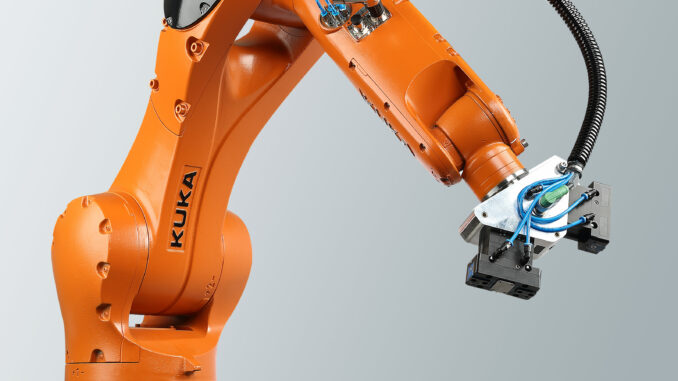
German industrial robot manufacturer Kuka AG warned on Friday that the Chinese economy is slowing down the company's business, the company is the latest German company to issue such warnings. The company pointed out that the uncertain future of China's automation market is one of the reasons why sales in 2018 fell short of expectations and profit margins fell.
German companies investing in China ranks among the top foreign-invested companies. Over the years, as China's economy has grown at an alarming rate, German medium-sized engineering companies have provided China with the capital products needed for factory power supply and infrastructure construction.
China is Germany's main trading partner, and the German government's statistics show that the total bilateral trade in 2017 reached 188 billion euros (about 215.69 billion US dollars). In that year, Germany`s exports to China totaled 86 billion euros (about 98.64 billion US dollars), making China the third largest export market for Germany, second only to the United States and France. Germany is the second largest non-Asian importer of Chinese goods in the world.
According to data from the German industry lobbying organization BDI, about 5,200 German companies operating in China employ more than 1 million people. Industrial group Siemens (Siemens AG, SIEGY), chemical giant BASF SE (BF), automaker Volkswagen AG (VOW.XE) and thousands of other German companies have invested billions in China Dollar. According to BDI estimates, by the end of 2017, German companies' total investment in China reached 13 billion euros ($14.92 billion).
However, the recent slowdown in the Chinese economy is faster than expected. In December last year, China's factory activities fell to the lowest level in nearly three years. According to official data, the profits of large Chinese industrial companies in November last year fell for the first time in three years. Chinese consumers have also cut spending, leading to a decline in sales of cars and other goods. Apple Inc. (AAPL) attributed the slowdown in iPhone sales this month.
Economists at Bank of America Merrill Lynch said this week that Germany is expected to fall into a technical recession in the second half of 2018. The technical recession refers to the negative growth of the economy for two consecutive quarters. Economists at the bank wrote that China`s economic slowdown is one of the reasons, and that China`s contribution to Germany`s GDP growth has fallen to zero last year.
Since exports to China only account for a portion of German companies' activities in China and China, this may actually underestimate the damage caused by the Chinese economic slowdown to German companies.
Kuka's interim chief executive Peter Mohnen said in a conference call on Friday that China has never shown such a low growth rate since the financial crisis.
Kuka, a manufacturer of automation equipment and software, was acquired by the Chinese home appliance manufacturer Midea Group in 2017. Midea`s hostile takeover of Kuka in 2016 is a milestone in persuading the German government to tighten the law that protects sensitive industries from foreign acquisitions. It is widely believed that this is aimed at China`s massive investment in the country for many years. .
Mohnen said the current slowdown forced Kuka to abandon its 2020 goal. The company also plans to cut costs of about 300 million euros ($344.5 million) by 2021, including layoffs, due to slower sales growth.
Mohnen said that despite the economic slowdown, the Chinese robot market is still Kuka's growth engine and far from saturation. Kuka said the company plans to expand its products and production capacity in China to better cater to the Asian market. In 2017, the Chinese market contributed about 20% of its sales.
In the auto market, BASF said in December that due to factors such as Sino-US trade friction, Chinese customers' demand has slowed significantly, and warned that profits in 2018 may be weaker than expected.
Analysts expect more German companies to issue similar warnings for fourth-quarter results.
Volkswagen sales director Christian Dahlheim told reporters on Friday that they are very worried about the Chinese market and expect the market to be difficult to grow this year and prepare for this situation. The company announced last Friday that car sales in the Chinese market fell 13% in December last year.
On Thursday, Olaf Berlien, chief executive of German lighting company OSRAM, told the German newspaper Augsburger Allgemeine that the decline in car sales in the Chinese market in the last quarter of 2018 had a negative impact on the company.
In this context, the politically influential BDI Federation of German Industries called on German and European policymakers to take a tougher stance on China's country-driven economic model on Thursday.
The organization said in an unusually frank and open position that despite the attractiveness of the Chinese market, companies are increasingly concerned about potential risks and, if necessary, by further diversifying them to balance these risks.
FROM:WWW.BUSINESSNEWS.CN